Types of connectors
You can get lost in the amount of charging options there are available to you, whether you are a homeowner or business looking to expand your EV vehicle fleet, we have options for you. EV chargers are categorised based on speed; ultra-rapid, rapid, fast and slow.
Ultra-rapid and rapid charging
- CHAdeMO
- Combined Charging System (CSS)
- Combo 1
- Combo 2
- Type 2
- Tesla Superchargers
- Tesla CCS
- Tesla Type 2
Fast charging
- Type 1
- Type 2
Slow charging
- 3-Pin Plug
- Type 1
- Type 2
What is the difference between AC and DC charging

Your electric vehicle can either be charged through AC (Alternating Current) or DC (Direct Current) charging connectors.
The difference between these is that AC chargers have to have an onboard charger that converts power inside or outside of the vehicle before charging the battery, whilst DC chargers convert the power inside of the charger, and so, does not need an onboard charger.
There are two different AC power supply systems: single phase, and three phase. Single phase power systems have one neutral wire, and one power wire. Three phase power systems have three power systems, and are three times as efficient when compared to single phase power systems. However, due to increased efficiency, they are more expensive than the single phase power systems.
Luckily, you likely do not need to worry about this. The majority of fully electric vehicles can use both AC and DC power.
When charging your electric vehicle, you should really only charge it up to 80%. This is when the charging starts to slow down, and will become less cost efficient to charge the remaining 20%. This is also similar with a low battery – you shouldn’t really let it get below 20%. Having your EV at either 0% or 100% charge damages the battery, and decrease the overall life span of your vehicle.
AC Charging
Most common EV charger, as they are inexpensive and accessible. This charger ranges from 3-22kW , and can take between 3-12 hours to charge.
AC chargers are the most common type of EV charger on the market today. You’ll find them to be the most inexpensive type of charger and are widely accessible – so if you’re on a budget or need a charger installed at short notice, then AC chargers will be your best option. Of course, there are also limitations of AC charging, with most models topping out at only 22kW of power, compared to DC chargers that can often reach up to 300kW.
Types of AC chargers
- 3-pin plug
- Type 1 (single phase) is very common in American electric vehicles
- Type 2 (triple phase) is common for European and Asian electric vehicles
DC Charging
As stated above, DC chargers can often reach up to 300kW of power. You will come across these at motorway service stations for rapid charging. hese services are excellent for when you are on the go, and in need for a quick pick me up. This charger averages at 40-50kW, and only takes about 20-40 minutes to charge your EV to 80%.
Types of DC chargers
- CHAdeMO
- CCS
- Tesla Type 2
Rapid and ultra-rapid charging

The ultra-rapid and rapid chargers are the fastest type of chargers, and can get an electric vehicle up to 80% within minutes. These chargers are most likely found at highly trafficked areas, such as motorway services or main routes. They are designed to power an electric vehicle as fast as possible with the utmost convenience.
The ultra-rapid and rapid chargers are the fastest type of EV chargers. They can get an EV up to 80% in just a few minutes. Amazing, right? You will most likely find these at highly trafficked areas, like motorway services or main routes – as almost all use DC power. These chargers have been designed to power an electric vehicle as fast as possible with the least inconvenience.
CHAdeMO

The CHAdeMO (meaning CHArge de MOve, or charge for moving in English) charger has a 10 pin structure, ensuring that you can quickly charge your EV within 25-75kW power. This charger originates from Japan and is exceptionally popular within the east asian region. This is particularly true in areas such as, the home country – Japan, and South Korea. This charger type has not gained traction in European and North American vehicles, and you are unlikely to obtain one in these areas.
Combined Charging System (CCS)
The Combined Charging System, otherwise known as CCS, has two models: the combo 1 and combo 2. To make things simpler for you, these are simply enhanced Type 1 and Type 2 chargers. They have additional pins under the original Type 1 or 2 charging structure that speeds up the charging process.
Combo 1

Combo 1 supplies AC energy through the pins within the Type 1 format (the upper half of the connector) and DC energy through the additional pins underneath. You will primarily find this model North America and South Korea.
Combo 2

Similar to Combo 1, Combo 2 uses the Type 2 format (the upper half of the connector) to supply AC energy, and to supply DC energy with the additional pins underneath. You will find that this model is commonly used within the European continent.
Type 2 (three phase)

The Type 2 model charges at around 25-75kW DC power from 10 pins. You will find that it takes 20-60 minutes to charge your EV with this charger. Much like the CHAdeMO, you will find this charger in the east Asian region and, again, is not commonly integrated in European and North American electric vehicles.
Tesla Superchargers
Tesla Superchargers charge at 72-250kW AC and will fill a battery within 20-40 minutes. Despite this, they are the slowest rapid connector as the use AC energy. As stated above, this slows down the charging speed as there has to be an onboard converter to convert the power to DC.
Tesla CCS
You might notice that the Tesla CCS has the same charging model as the CCS Combo 2 connector. Due to the growing number of CCS charging stations, Tesla has adapted this model into their EV to increase convenience for EV owners.
Tesla Type 2
The Tesla Type 2 has the same model as the Type 2 connector.
Fast charging

This charging type charges at around 43kW AC and can generally charge an EV within 20-40 minutes. These chargers are slower than rapid and ultra-rapid chargers as they use AC power, and have to use the onboard converter to convert the AC power to DC power.
Type 1 (single phase)

The Type 1 fast charger uses at about 7 AC power, and may be on older electric vehicles. This charging type is becoming increasingly unpopular within modern vehicles, and you may notice is harder to find.
Type 2 (three phase)
The Type 2 fast charger is extremely popular, and very well may be the one you use. The charger uses 3-19kW of power and is up to 3 times faster than the type 1 connector. This model has been implemented into the vast majority of modern EVs.
Slow charging

Slow chargers provide 3-6kW and can take up to 12 hours to change your electric vehicle. Many use these chargers overnight and whilst at work.
3-Pin Plug (single phase)

The 3-Pin Plug, something we are all familiar with, provides 2-3kW AC through 3-pins and takes around 12 hours to charge. If you have used this charger before, you will know that it is the slowest and least efficient method of charging. However, this charger is the most accessible charging type – there is no additional setup or installation needed to charge your EV using this method.
Type 1 (single phase)
The Type 1 slow chargers are slightly better than the 3-Pin Plug charger. They use up to 3kW AC of power and take upwards of 12 hours to charge.
Type 2 (three phase)
The Type 2 slow charger has 7 pins to produce 3 – 7kW AC of power.
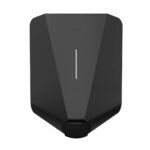
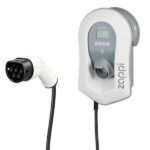
The brands Avail EV stock
Check out brands we stock.
The difference between home chargers and public charging points
Public charging points:
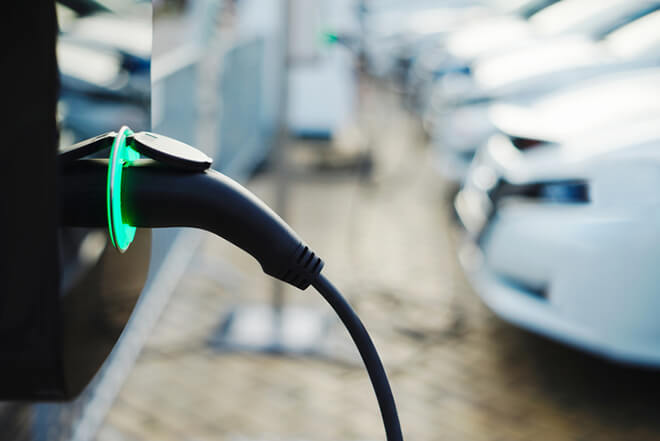
- Almost all public charging points are tethered – meaning you will likely not need to use your own charging cable. You will find these charging stations in public spaces, shopping centres and at workplaces for your convenience. Rapid and Ultra-Rapid charging stations have charging cables readily tethered to increase time efficiency.
- Public charging points are almost certainly Ultra-Rapid or Rapid chargers. These are placed in highly trafficked areas for easy access.
Home charging point:
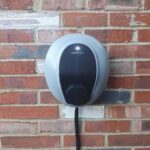
- Home charges come in a variety of tethered and untethered options.
- They are extremely convenient, and very easy to access.
- The majority of chargers can be smartphone controlled, and have access to the internet.
- They are lockable, to prevent theft and increase your safety.
- They can be installed inside or outside your home. The chargers are waterproof to prevent water damage and avoid additional expenses.
Our best electric car chargers
Take a look at our 5 Best Electric Car Chargers, or get in touch today.